01 The Object
Not a book in the ordinary sense. Quotations from Chairman Mao Tse-tung was compiled in 1964 by the staff of PLA Daily, under the General Political Department of the People's Liberation Army, then directed by Lin Biao. It was designed to specification: small enough for a tunic pocket, bound in red vinyl so it would survive a field, printed in a type size a conscript with two years of schooling could read. It was issued to soldiers before it was ever sold to civilians.
That origin is the whole point of the file. Every other document in this archive was written to win an argument — FILE 02's manifesto, the Twenty-One Conditions, the Erfurt Programme. This one was written to be carried. It is the tradition's only mass-produced piece of equipment, and it should be read the way you read a field manual: by asking what task it was cut down to fit.
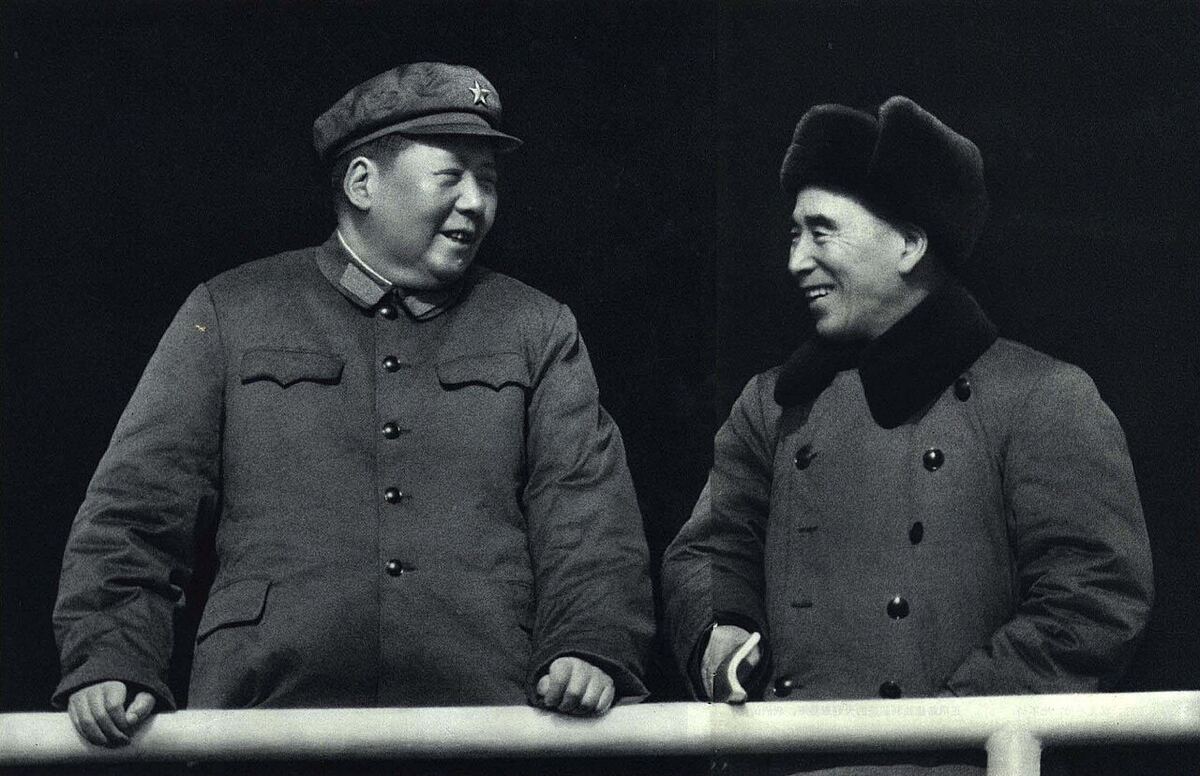
A book compiled by an army newspaper, issued as kit, and later held up in a crowd as proof of who you were.— THE ARCHIVE, ON WHAT KIND OF OBJECT THIS IS
02 Print History
May 1964 — first edition, 200-odd quotations in 30 chapters, issued internally within the PLA. Not a commercial publication and not, at first, intended as one.
1965 — the second edition expands to the 33 chapters indexed in §03 below, the arrangement that became canonical.
March 1966 — 28 million copies of the second edition have been printed. The book has left the army.
1966 — the Foreign Languages Press in Peking issues the official English translation, the edition most readers outside China have ever handled, and the one this annex indexes. Editions follow in dozens of languages, distributed as a deliberate instrument of foreign policy.
December 1966 — Lin Biao's foreword is added, instructing the reader to study Chairman Mao's writings, follow his teachings and act according to his instructions. The book now carries an explicit endorsement from Mao's designated successor.
13 September 1971 — Lin Biao dies in a plane crash over Mongolia, fleeing after an alleged coup attempt. His foreword is torn out of existing copies and removed from new printings. Millions of surviving copies from this period have a stub where a page was. Nothing in the archive illustrates the mechanics of a personality cult more economically than a page removed from a book by hand, at scale.
12 February 1979 — a Central Propaganda Department circular withdraws the book from circulation and halts printing. At least one billion official copies exist by this point; counting unofficial and foreign printings, credible estimates run several times higher.
03 The Contents
The 33 chapters of the second edition, in order, with the archive's note on each. The text itself is not hosted here. Each chapter links out to the full English translation in the Mao Internet Archive at marxists.org, which has carried it for decades. The reasoning is in §05.
04 What It Was Actually For
Between 1966 and 1971 the book stopped functioning as a text and started functioning as a credential. It was waved in formation at rallies, quoted at the opening of meetings, consulted before surgery and before ploughing, and — the part that matters for the schisms file — used as evidence in struggle sessions. Not owning one, or owning one insufficiently worn, was a fact about you that other people could act on.
This is the specific failure the archive wants on the record, because it is not unique to China and not confined to 1966. A body of theory compressed into portable slogans stops being something you can be wrong about and becomes something you can be caught not having. The school's own best contribution, the mass line of chapter 11 — that correct ideas come from the masses and must be returned to them — is precisely the method that a catechism makes impossible to practise. You cannot go to the masses to find out what is true if the answer is already printed in your pocket.
The quotation posters below are the clearest evidence of what the book had become. These are not illustrations of the text; they are single passages from it, blown up to wall size and printed as standalone objects. Chapter 17 and chapter 6 stopped being pages you turned to and became surfaces you walked past.
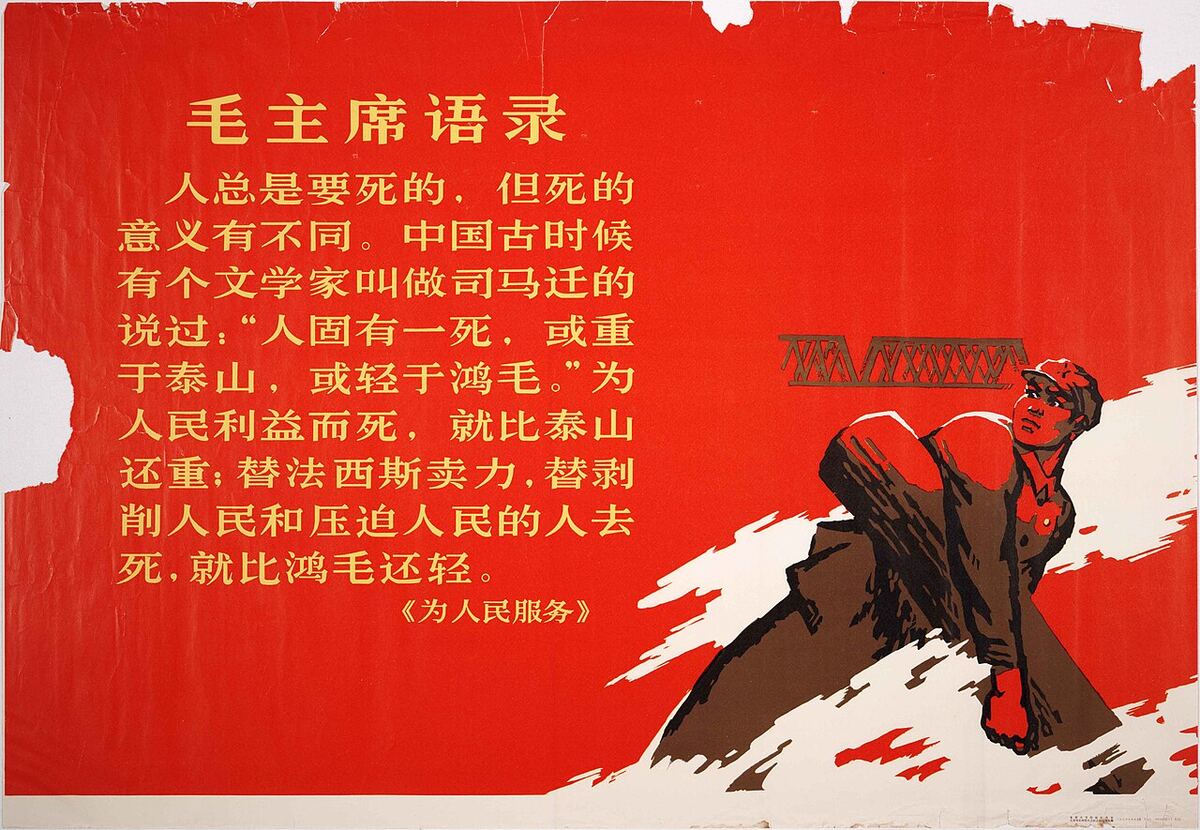
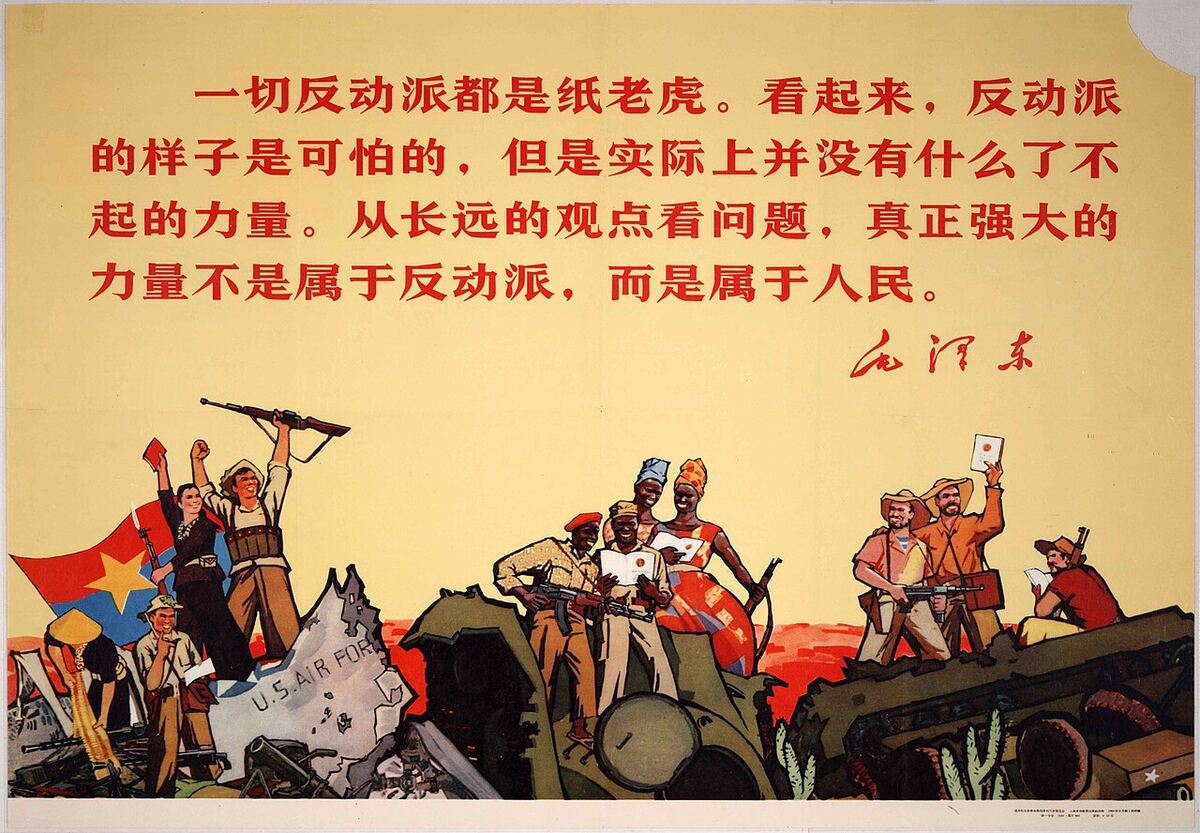
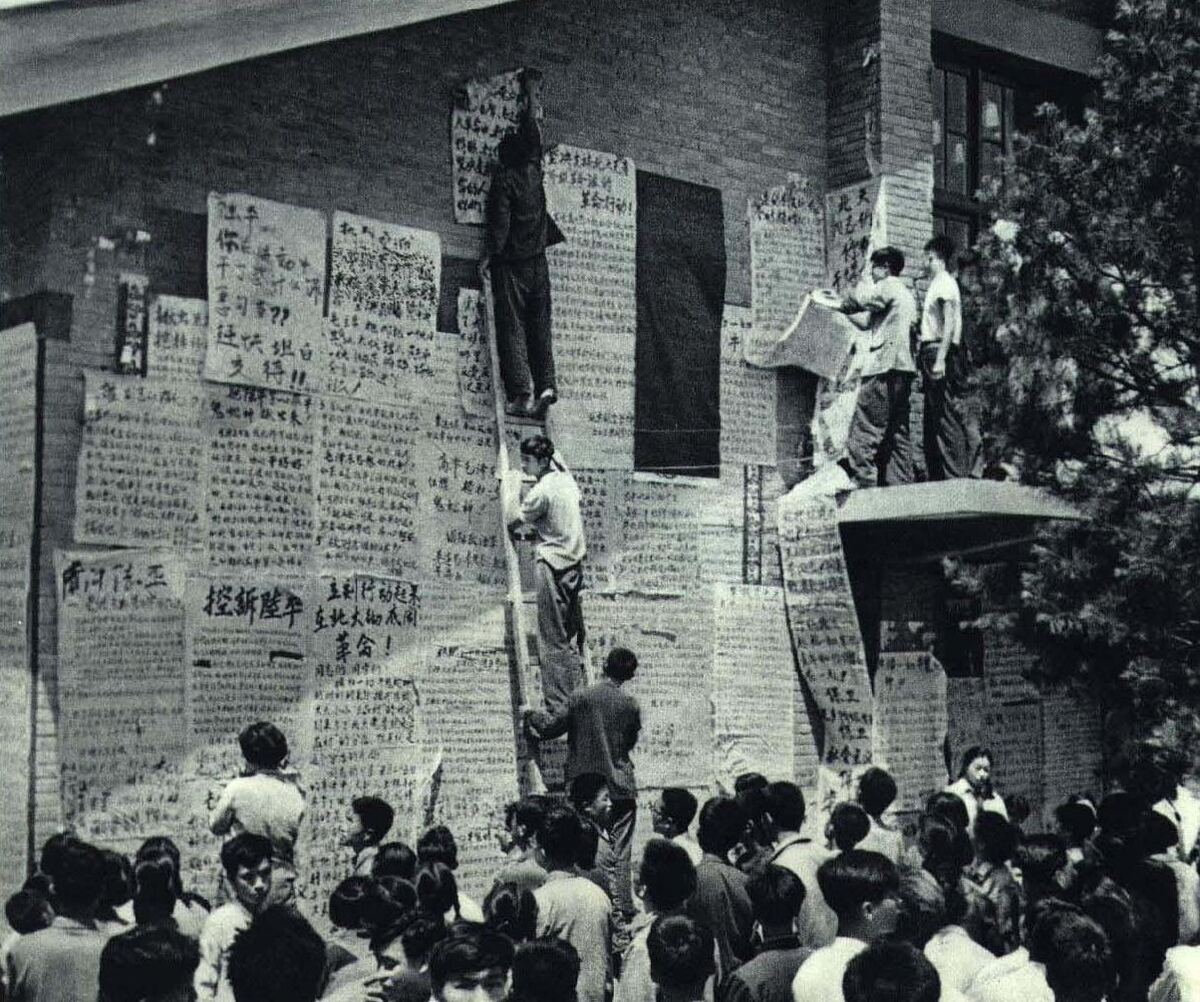
The full case for and against the school is filed at FILE 12, where the Cultural Revolution is scored alongside the land reform, the literacy campaign and the famine. This annex covers the object, not the verdict.
05 Why the Text Is Not Hosted Here
Two reasons, and the archive states both rather than quietly linking out.
Copyright. Mao died in 1976, which puts the underlying Chinese text into the public domain in the People's Republic on 1 January 2027 under its life-plus-fifty term. The Foreign Languages Press English translation of 1966 is a separate copyrightable work, and in the United States a foreign work of that period was most likely restored to copyright by the 1994 URAA. Marxists.org has hosted this translation for decades and mirrors are everywhere; that is a fact about enforcement, not about the term. This archive links rather than copies.
Editorial. A complete hosted text would make this the longest document on the site by an order of magnitude, and it would be the only place in the archive where a single school's scripture is reproduced in full while every other school gets a dossier. Annex C applies one instrument to everyone; hosting one tendency's catechism and no other's would fail that standard on the archive's own terms.
06 Provenance
Chapter titles and ordering follow the second edition as carried by the Mao Internet Archive. Print figures and the 1979 withdrawal are drawn from Britannica and from the Cambridge global history of the book. The archive hosts no part of the text and claims no rights in it.
Plates are vendored from Wikimedia Commons and re-encoded to web size; the full credit and licence for each is printed in the Plate Room's provenance section. The Cultural Revolution photographs are in the public domain; the quotation posters are CC BY 2.0.