FILE 08 // EST. 1918 // SEATS: BERLIN, AMSTERDAM, NAPLES // STATUS: PURE, AND FEW
LEFT COMMUNISM
The heresy to Lenin's left: councils over parties, class over leaders,
and the charge — filed in 1921 and never withdrawn — that the Russian Revolution was
killed by its own victors.
The Situationist current — councils, updated for the spectacle
SCHISMS
vs. Lenin— 1920, the pamphlet with their name on it
Internal: councilists vs. Bordigists — two opposite heresies, one file
01 Origin Vector
Left communism is what remained of the revolution's first supporters after they read the fine print.
Its founders were not dissidents but co-founders of the communist movement: Anton Pannekoek,
the Dutch astronomer whose anti-parliamentary polemics Lenin had praised for years; Herman Gorter,
poet of the Dutch canon; the German KAPD, formed in 1920 when the official party expelled half its
membership for refusing electoral work; and in Italy Amadeo Bordiga, first leader of the Italian
Communist Party, abstentionist, and the only man on record who told Stalin to his face, in Moscow, in
1926, that he was destroying the International.
The break came over the institutions of the old world. Moscow's 1920 line ordered communists into
parliaments and reactionary trade unions as tactical terrain; the lefts answered that these forms had
just spent 1914–1918 marching the class into the trenches — they were not neutral tools but machines
for domesticating revolt. Lenin's "Left-Wing" Communism: An Infantile Disorder (1920) made the
quarrel famous and gave the school its ironic name; Gorter's Open Letter to Comrade Lenin is
the reply the pamphlet rarely gets shelved with. By 1922 the lefts were out of the International.
Kronstadt, for them, had already settled who was right.
02 Core Doctrine
All power to the councils — meaning it
The workers' council, born 1905, is the revolution's own organ: elected on the shop floor,
recallable at will, legislature and executive in one. A party that substitutes itself for the
councils has not led the revolution; it has replaced it.
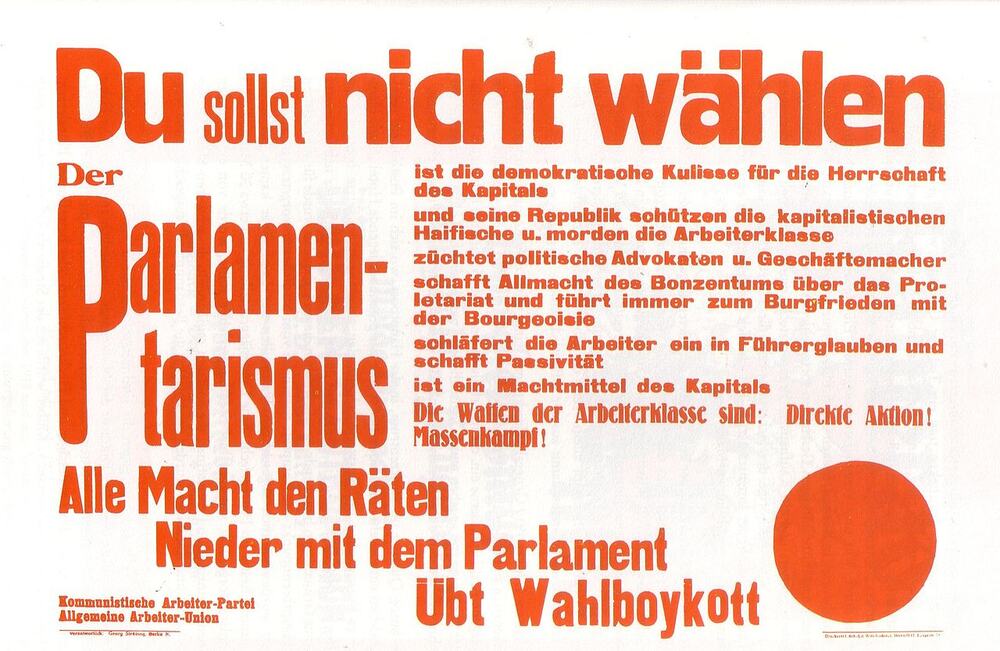
Anti-parliamentarism
Elections in the imperialist epoch train the class in delegation — the precise habit revolution
must break. Pannekoek: the point is not who sits in parliament, but that the class learns to act
without representatives.
Against the official unions
Permanent negotiating machines end as co-managers of the wage system. The lefts built factory
organizations instead — unions of the revolution, not of the contract.
State capitalism
The school's forensic verdict on the USSR: nationalization without workers' power changes the
employer, not the relation. Wage labour plus accumulation plus a single state boss equals
capitalism — under new management.
The Bordigist inversion
The Italian left ran the opposite heresy on one point: Bordiga kept the party as the class's
historic "organ," rejecting democracy itself (counting noses, he held, is a bourgeois mechanism)
while damning Moscow harder than any councilist. One file, two irreconcilable purities —
the school schisms even with itself.
"The old labour movement is the organization of the working class as a part
of capitalist society. The new labour movement is the organization of the working class against it."
— AFTER PANNEKOEK, WORKERS' COUNCILS (1946)
03 Key Figures
ANTON PANNEKOEK 1873–1960 // astronomer of councils
HERMAN GORTER 1864–1927 // the open letter to Lenin
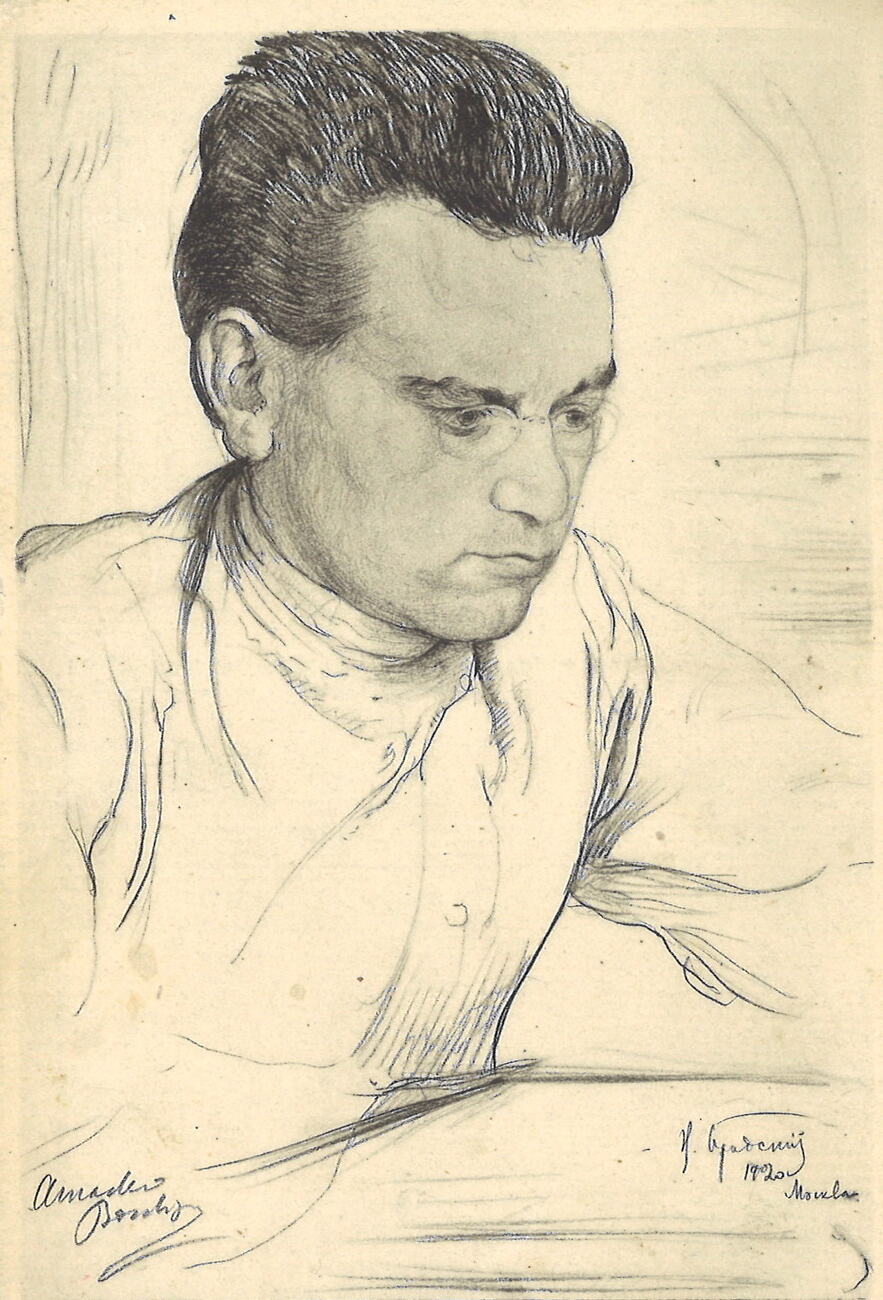
AMADEO BORDIGA 1889–1970 // the man who argued with Stalin
04 In Practice
The school's operational history is brief and mostly tragic: the KAPD peaked near 40,000 members
amid Germany's 1920–21 risings, backed the doomed March Action, and dissolved into factory-group
fragments by mid-decade. Its true practice became analysis — the small-journal tradition
(International Council Correspondence, Mattick in America, the French Socialisme ou
Barbarie that carried council ideas to a young generation including a certain Cornelius
Castoriadis) — and preservation: through Stalin's century, the left communists kept a complete,
written, contemporaneous record of everything they said would go wrong, as it went wrong.
Bordiga, banned from politics by Mussolini and expelled by Moscow, resurfaced after 1945 running
a micro-party and writing under initials; his rehabilitated reputation now anchors the "communization"
current. Pannekoek returned to the telescope — there is a crater on the Moon named for the school's
chief theorist, which the school would note is still more territory than the party ever gave the
councils.
05 Schisms & Enemies
vs. Lenin (1920). Parliament, unions, compromise — Schism №6.
The pamphlet's title has done the school's PR for a century; the reply remains in print too.
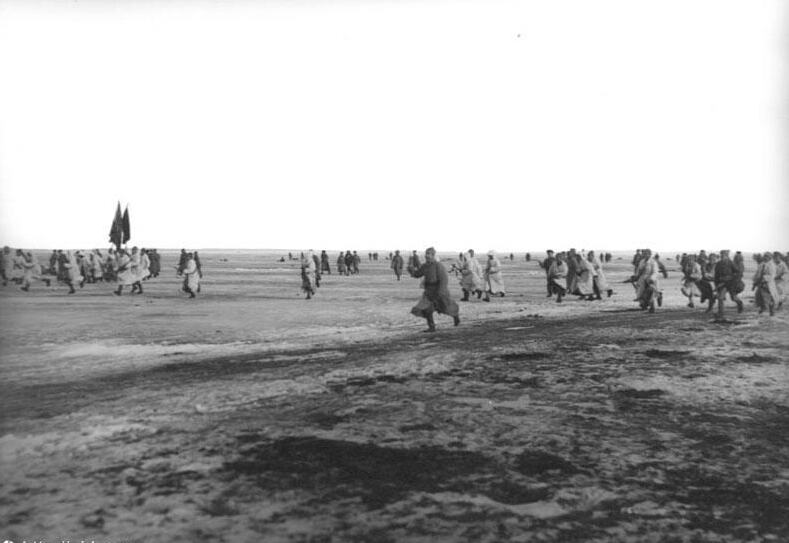
Kronstadt as verdict (1921). "Soviets without parties" answered with artillery: for this
file, the date the workers' state became a state against workers.
councilists vs. Bordigists. Class-spontaneity versus invariant party doctrine — the school's
own internal Hague, running quietly since 1920 in journals with combined circulation of a small town.
vs. everything "actually existing." USSR, China, Cuba: state capitalism, all of it, said
before it was fashionable — the archive's most vindicated unpopular opinion, or its most useless
correct one, depending on your file of origin.
06 Timeline
1918German and Dutch lefts oppose parliamentarism inside the new parties; Bordiga's abstentionist faction leads in Italy.
1920KAPD founded; Lenin's "Left-Wing" Communism; Gorter's Open Letter replies.
1921Kronstadt; the March Action fails; the die is cast.
1922The lefts exit or are expelled from the Comintern.
1926Bordiga confronts Stalin in Moscow; expelled from the PCI 1930.
1938Paul Mattick's councilist journal keeps the flame in America.
1946Pannekoek's Workers' Councils — the summa, written under occupation.
1949Socialisme ou Barbarie founded in Paris; council ideas reach the New Left.
07 Legacy
Left communism never governed a village, which is its argument: it kept the revolution's original
measure — the self-acting class — and applied it to every state that claimed the name, starting with
the first. Wildcat strikes, council republics, 1956 Budapest, 1980 Gdańsk: whenever workers build
exactly the organs this school described, without having read it, the file marks another entry.
History's most consistently outvoted correct minority — or its purest proof that purity doesn't
scale. The archive shelves both verdicts.
08 Plates
The left that broke leftward: against the united front, against parliament, against the party's discipline over the class. Kronstadt is where the argument stopped being theoretical.
March 1921 // Kronstadt — the sailors of 1917, put down by the state they made1919 // the KAPD — Germany's council communists, expelled within two yearsBordiga // the Italian left, and the last man to argue with Lenin and not recant
Plates are vendored from Wikimedia Commons under their own licences and re-encoded to web size; the credit for each is listed in the Plate Room.