The mass strike
Not a tool the party schedules but a process the class generates: strikes politicize, defeats teach, organization crystallizes in motion. The revolution is a school whose pupils enroll themselves.
FILE 07 // EST. 1906 // SEAT: BERLIN // STATUS: MARTYRED, UNREFUTED
Revolutionary against the reformists, democratic against the vanguard: the mass strike as the school of revolution, and freedom — always — as the freedom of the one who thinks differently.
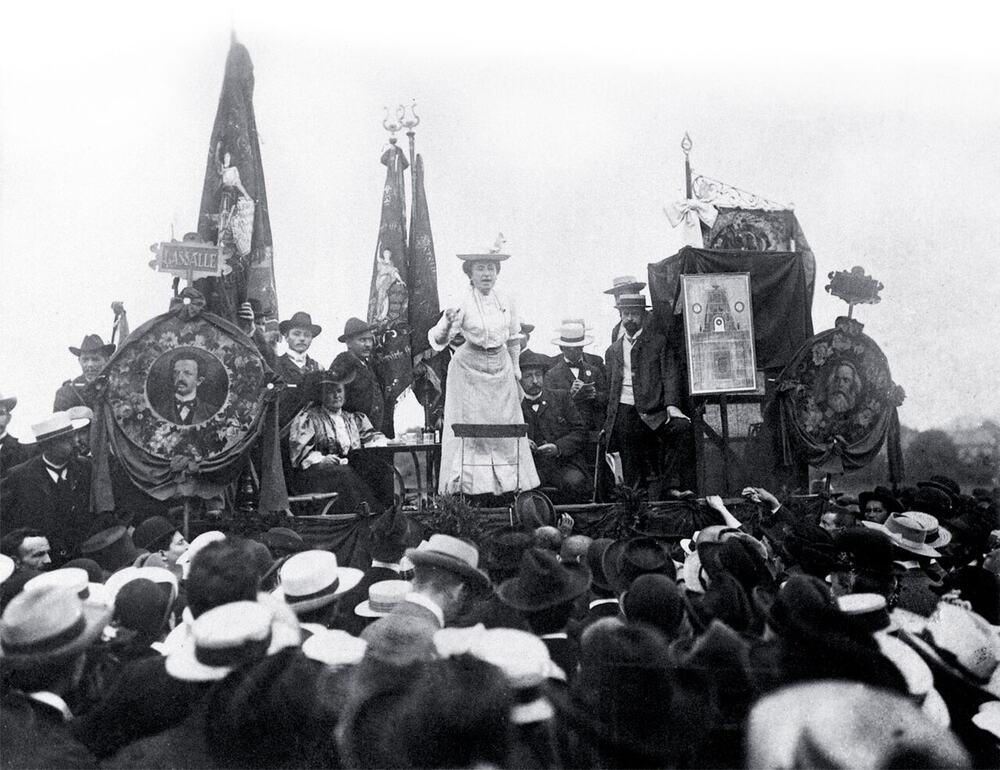
Rosa Luxemburg entered the German movement carrying three disadvantages she declined to notice: Polish, Jewish, a woman — in the Kaiser's Germany, in a party of men. A doctorate in economics from Zurich, a marriage of convenience for the passport, and by 1899 she was the SPD's sharpest pen, demolishing Bernstein in Reform or Revolution at age twenty-eight: reformism does not choose a slower road to socialism, it chooses "surface modifications" of a system whose collapse is written into its accumulation.
The 1905 Russian Revolution gave her the doctrine's engine. She crossed illegally into Warsaw to take part, and read in the wave of strikes something neither Kautsky's patience nor Lenin's staff-work contained: the mass strike — economic and political struggle feeding each other, organization born from the fight rather than before it. "The most precious thing... is the proletariat's spiritual growth in the struggle itself." Her Second International colleagues filed the pamphlet under Russian exotica. Nine years later, the patient party voted for the war, and her file became a school.
Not a tool the party schedules but a process the class generates: strikes politicize, defeats teach, organization crystallizes in motion. The revolution is a school whose pupils enroll themselves.
Against Lenin's professionals: a class educated by decree will be ruled by decree. "The errors committed by a truly revolutionary movement are infinitely more fruitful than the infallibility of the cleverest Central Committee."
Her 1918 prison critique of the Bolsheviks, written by a supporter: without general elections, free press and assembly, "life dies out in every public institution... in which only the bureaucracy remains active." Not a liberal objection — a prediction of exactly what followed.
The Accumulation of Capital (1913): capitalism survives by devouring its non-capitalist outside — colonies, peasantries, new markets. When the outside runs out, the system chokes. Imperialism is not policy but metabolism.
The Junius Pamphlet, from a wartime cell: history guarantees nothing. The crisis offers two exits, and barbarism — she was writing during Verdun — is the one on schedule. The century's least refuted sentence.
"Freedom is always and exclusively freedom for the one who thinks differently."— LUXEMBURG, THE RUSSIAN REVOLUTION (1918)


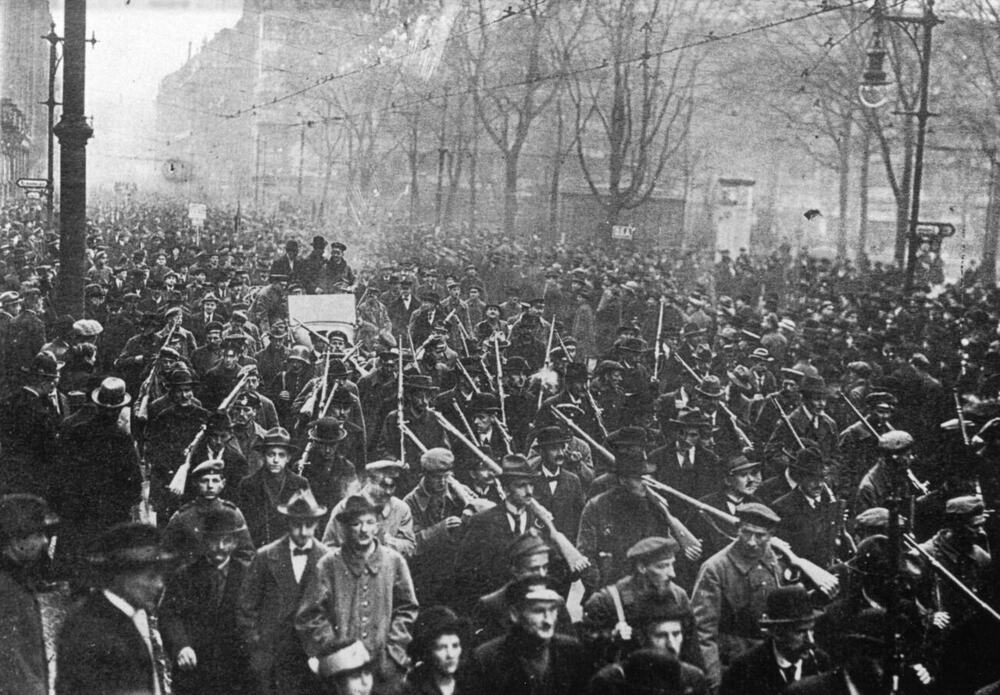
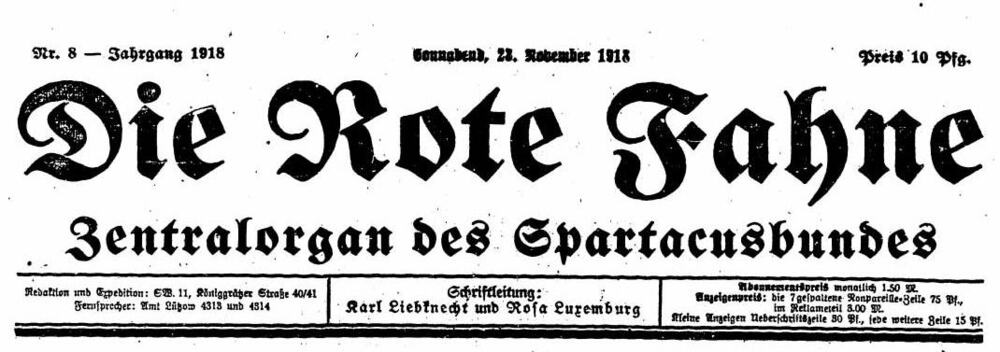
The school's one operational test lasted eleven weeks. When the German Revolution toppled the Kaiser in November 1918, Luxemburg — just out of prison — co-founded the KPD with Liebknecht and argued, against her own young party's impatience, that the January 1919 rising was premature. Outvoted, she stayed with it anyway; that was the doctrine too. The SPD government — her old party — unleashed the Freikorps. On 15 January 1919 both were captured and murdered; her body was thrown into the Landwehr Canal. The killers' commanding tradition ended in the Third Reich; the government that hired them, in every communist indictment of social democracy since.
Luxemburgism is the road every other school insists was impassable — revolutionary but democratic, organized but spontaneous — and the standing rebuke to both of the movement's victors. The reformists who killed her and the Leninists who canonized-then-shelved her each keep her portrait for use against the other. Council communism built on her spontaneity; the New Left of 1968 revived her; and her two best sentences — on barbarism, and on the one who thinks differently — have outlived every state in this archive.
Berlin, January 1919. The tendency that argued for revolution without the party's iron grip was destroyed within a fortnight of trying it.
Plates are vendored from Wikimedia Commons under their own licences and re-encoded to web size; the credit for each is listed in the Plate Room.