FILE 05 // EST. 1889 // SEAT: BERLIN // STATUS: THE CHURCH THAT SPLIT
ORTHODOX MARXISM
The Second International and its German cathedral, the SPD: Marxism as
settled science, revolution as ripening fruit — build the party, win the vote, and wait
for capitalism to complete its own collapse. On schedule.
THE CENTERMETHOD: PATIENT ACCUMULATIONCOLLAPSE: PENCILLED IN
When Engels died in 1895, the keys to the doctrine passed to Karl Kautsky — "the pope of
Marxism" — and the institutional church was already built: the Second International (founded
1889) and its flagship, the German SPD, the largest, richest, best-organized workers' party on
earth. A million members; ninety daily papers; its own schools, gyms, choirs, funeral societies —
a complete counter-society waiting, in theory, to inherit.
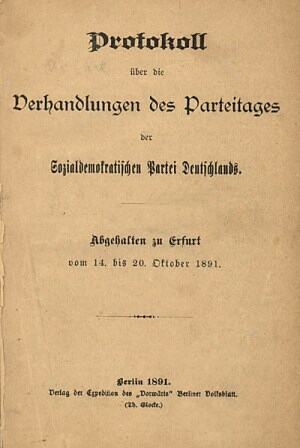
The doctrine Kautsky codified in the Erfurt Program (1891) held the two halves together with
a comma: capitalism's concentration and crises make socialism inevitable (the revolutionary
maximum program), and until then the party fights for reforms (the minimum program). The SPD, in
August Bebel's formula, was "a revolutionary party, but not a party that makes revolutions." History
would do the heavy lifting; the party's job was to be ready.
02 Core Doctrine
Marxism as science
Historical materialism read as natural law: capitalism's breakdown is a prediction on par with
astronomy. Kautsky's generation, raised on Darwin, treated the revolution as an evolutionary
certainty — which quietly made insurrection look unscientific.
The party as counter-world
Organize everything: press, schools, unions, cooperatives, youth leagues. The class becomes
conscious inside the party's institutions, and the vote registers the accumulating majority
year by year.
Minimum / maximum program
Reforms now, revolution eventually — the Erfurt architecture. Its critics on both wings noticed
the same thing: the comma between the programs carried the whole structure, and nobody could say
when "eventually" arrived.
Attentisme
The strategy of revolutionary waiting. Do not gamble the organization on adventures; capitalism
is doing the work. Luxemburg called this the "parliamentary cretinism" of men who would keep the
party safe until it was irrelevant.
"The Social Democratic Party is a revolutionary party, but not a party
that makes revolutions."— KARL KAUTSKY, THE ROAD TO POWER ERA
03 Key Figures
KARL KAUTSKY 1854–1938 // the pope
EDUARD BERNSTEIN 1850–1932 // the honest heretic
GEORGI PLEKHANOV 1856–1918 // father of Russian Marxism — and of Lenin's teachers
04 In Practice
For twenty-five years the model worked exactly as designed: the SPD's vote climbed election after
election until, in 1912, it was the largest party in the Reichstag. Then came the design's single
untested assumption. On 4 August 1914 the parliamentary fraction voted unanimously for the
Kaiser's war credits, and the International's parties followed their own flags into the trenches.
The revolutionary counter-society turned out to be, at the decisive hour, a patriotic one.
The church's afterlife was governmental: the SPD took power in the 1918 German Revolution — and used
Freikorps mercenaries to crush its own left, killing Luxemburg and Liebknecht. Orthodoxy's two heirs
were now irreconcilable: a social democracy that governed capitalism, and a communism that never forgave
it. Kautsky spent his last two decades writing against both Bolshevism and fascism, and died in
Amsterdam exile in 1938, the year the purges consumed what remained of his Russian students.
05 Schisms & Enemies
The revisionism debate (1896–1903). Bernstein audited the prophecy — wages rising, middle
class not vanishing — and proposed dropping the collapse: "the movement is everything." Kautsky and
Luxemburg condemned him formally; the party kept his practice informally.
Schism №2.
August 1914. The war-credits vote — Schism №4 — killed the
Second International as a revolutionary body and split every member party into patriots and
internationalists.
vs. Lenin (1918). Kautsky's The Dictatorship of the Proletariat called the Bolshevik
state socialism without democracy, therefore not socialism; Lenin's reply made "renegade" a permanent
title. Democratic socialism and communism date their divorce from this exchange —
Schism №5.
06 Timeline
1889Second International founded in Paris on the Revolution's centenary.
1891The Erfurt Program: Kautsky writes the catechism.
1899Bernstein's Evolutionary Socialism opens the revisionism war.
1912SPD becomes the largest party in the Reichstag: the strategy's zenith.
19144 August: war credits approved; the International collapses.
1917Kautsky opposes Bolshevik methods within months of October.
1919SPD government presides over the killing of Luxemburg and Liebknecht.
1938Kautsky dies in exile; his school survives as social democracy, minus the maximum program.
07 Legacy
Orthodox Marxism is the trunk from which the twentieth century's two great rivals both split:
social democracy kept its practice and dropped the revolution; Leninism kept the revolution and
dropped the patience. Its buildings — the mass membership party, the program, the party school —
furnished every successor. Its cautionary lesson is sharper: a theory of inevitable victory is
also a license for infinite postponement, and an institution built to inherit the future will,
at the decisive hour, protect the institution.
08 Plates
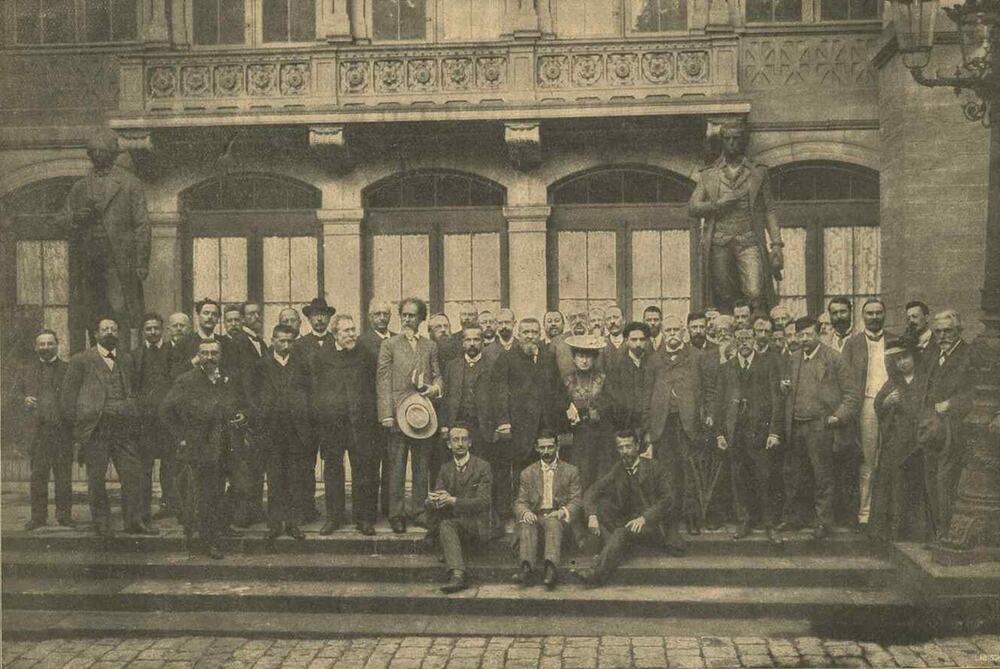
The Second International in session: the largest, best-organised socialist movement that had ever existed, photographed a few years before August 1914 destroyed it.
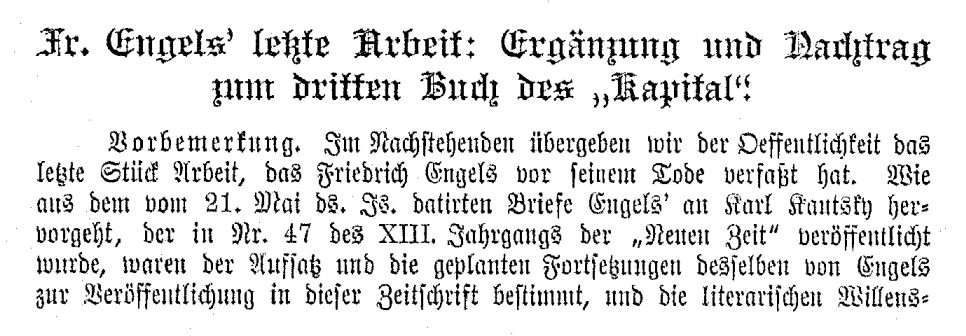
Stuttgart 1907 // the congress that resolved against the coming warErfurt 1891 // the congress protocol — the programme that defined orthodoxy for a generationDie Neue Zeit // Kautsky's journal — where the orthodoxy was actually adjudicated
Plates are vendored from Wikimedia Commons under their own licences and re-encoded to web size; the credit for each is listed in the Plate Room.