FILE 20 // EST. 1978 // SEAT: BEIJING // STATUS: OPERATIONAL — THE ARCHIVE'S ONLY SUPERPOWER
DENGISM
Socialism with Chinese characteristics: the Leninist party-state married to
the market — "it doesn't matter if the cat is black or white, so long as it catches mice."
The most consequential ideological pivot since 1917, still running.
REFORM & OPENINGMETHOD: CROSS THE RIVER BY FEELING THE STONESCAT COLOR: UNDISCLOSED
NEP & Yugoslav precedents — markets under the flag, studied closely
SPAWNED
Đổi Mới Vietnam, Lao reforms — the model franchised
Xi Jinping Thought — the current build, recentralized
SCHISMS
vs. the Gang of Four — 1976–81, the founding trial
vs. orthodox Maoists worldwide — "capitalist roader," confirmed
01 Origin Vector
Deng Xiaoping survived everything the century aimed at him: France's factories at sixteen,
the Long March at thirty, and two complete purges by his own party — 1966, paraded in a dunce cap,
his son crippled by Red Guards; 1976, purged again months before Mao's death. He returned from each
exile smaller, quieter and holding more of the apparatus. By December 1978, at the Third Plenum,
the twice-buried pragmatist held the deck: "practice is the sole criterion of truth" replaced the
"two whatevers" of Mao's designated heirs, and Reform and Opening (改革开放) became the line.
The founding settlement was judicial and theological at once. The Gang of Four went on televised
trial; the 1981 Resolution on Party History delivered the verdict on the founder himself — Mao was
"70% correct, 30% wrong," his Cultural Revolution a "catastrophe," his portrait staying on the gate.
The formula let the party condemn its past without condemning itself: continuity of chassis, total
replacement of engine. Orthodox Maoists at home and abroad called it capitalist restoration with
extra steps — Schism №13 — and the archive notes their case has
only accumulated exhibits since.
02 Core Doctrine
The primary stage of socialism
The load-bearing thesis: China is in socialism's primary stage, which may last a century
or more, and the task of that stage is developing the productive forces — by whatever works,
markets included. Orthodoxy's timetable replaced with a geological one; every liberalization
pre-authorized by definition.
The cat theory
"It doesn't matter whether the cat is black or white, so long as it catches mice" — Deng's
1962 heresy, promoted to state philosophy. Results over doctrine; growth as the measure of
truth. The archive's shortest complete ideology.
The socialist market economy
Special Economic Zones as laboratories (Shenzhen: fishing village to megacity in one
generation), household-responsibility plots replacing communes, price signals replacing quotas
— under a party that owns the commanding heights and every general's commission. Market as
tool, Leninism as owner.
Four Cardinal Principles
The non-negotiables fencing the experiment: the socialist road, the people's democratic
dictatorship, the party's leadership, Marxism–Leninism–Mao Zedong Thought. Everything is
reformable except the reformer's monopoly — the clause Tiananmen enforced.
Hide and bide
Foreign policy as patience: "hide your strength, bide your time, never claim leadership."
Retired from service circa 2013 by the current management, which the archive files as this
doctrine's one sunset clause.
"Poverty is not socialism. To be rich is glorious — development is the
only hard truth."— THE DENG LINE, AS RECEIVED; THE ARCHIVE NOTES THE FIRST CLAUSE IS VERBATIM, THE SECOND FOLK-ATTRIBUTED
03 Key Figures
DENG XIAOPING 1904–1997 // the paramount leader, no title required
XI JINPING b. 1953 // the current build: recentralized, term-limitless
04 In Practice
The results ledger is without precedent in economic history: roughly 800 million people
lifted from absolute poverty over four decades — the largest and fastest such movement ever recorded
— GDP doubling and redoubling from a base smaller than the Netherlands' to the world's second
(by some measures first) economy, and the archive's only file currently operating aircraft carriers.
The debit column is equally concrete: Tiananmen, 1989 — the Fourth Cardinal Principle enforced
by the PLA against students beneath Mao's portrait, casualty count still a state secret — plus
inequality at Gilded Age levels in a nominally proletarian state, systemic corruption the current
management's signature campaign both fights and wields, and a surveillance apparatus every other
file in this archive would have called science fiction and requisitioned immediately.
Under Xi Jinping the pendulum has swung back toward the party: term limits abolished (2018),
"Xi Jinping Thought" in the constitution, tech billionaires re-educated in humility, and Marxism —
genuinely, textually — back on the curriculum. Whether this is Dengism's correction, completion or
quiet repeal is the current decade's live question; the archive keeps the file open and the
pencil sharpened.
05 Schisms & Enemies
vs. the Gang of Four (1976–1981). The founding purge-and-trial — Mao's widow Jiang Qing
defiant in the dock ("I was Chairman Mao's dog; whomever he told me to bite, I bit"). Sentence:
death, commuted; verdict on the era: catastrophe, official.
vs. world Maoism. For Sendero, the Naxalites and the orthodox parties, Deng is the
arch-revisionist — the "capitalist roader" Mao's posters warned about, vindicated by every
stock exchange in Shanghai. Schism №13; the people's wars fight
on under the banner of a China that repudiated them.
vs. the liberal reading (1989). The other direction's schism: those who thought economic
opening implied political opening met the Four Cardinal Principles in Tiananmen Square. Zhao
Ziyang, the party's own general secretary, took the students' side and spent his remaining
sixteen years under house arrest — the file's internal casualty.
vs. every other file in the building, definitionally. Hoxhaists, Trotskyists, left
communists and anarchists agree on almost nothing except that FILE 20 is not communism; FILE 20's
answer — the primary stage, the 800 million, the century-long clock — does not require their
agreement and has not requested it.
06 Timeline
1904Deng born in Sichuan; radicalized in French factories by 1920.
1966First purge: "the number two capitalist roader."
1976Mao dies; second purge already in effect; the Gang falls in October.
1978Third Plenum: Reform and Opening; the anthology of the possible begins.
1980Shenzhen SEZ opens; the communes begin dissolving.
1981The 70/30 Resolution: the founder judged, the portrait retained.
1989Tiananmen: the experiment's political ceiling enforced.
1992The Southern Tour: reform relaunched by a retired man with no office and total authority.
2001WTO accession: the workshop of the world, incorporated.
2012–NOWXi's recentralization; the primary stage continues, under new management.
07 Legacy
Dengism closes the archive because it reopened the whole argument: it is either communism's
greatest adaptation — Leninism completing, at last, the development Marx said socialism required —
or its most successful abandonment, a red flag flown over the world's most dynamic capitalism.
What is not arguable: the largest poverty reduction in human history, the survival of the
party-state form every other file lost, and the fact that the twenty-first century's defining
geopolitical contest is between liberal capitalism and this file — an outcome not one
other dossier in this building predicted. The tree's last branch is, for now, its tallest.
The archive does not forecast. It files.
Archive clip // ChinaArchive clip // China, long edit
08 Plates
The school that kept the party and abandoned the programme, exhibited by the city it built to prove the point.
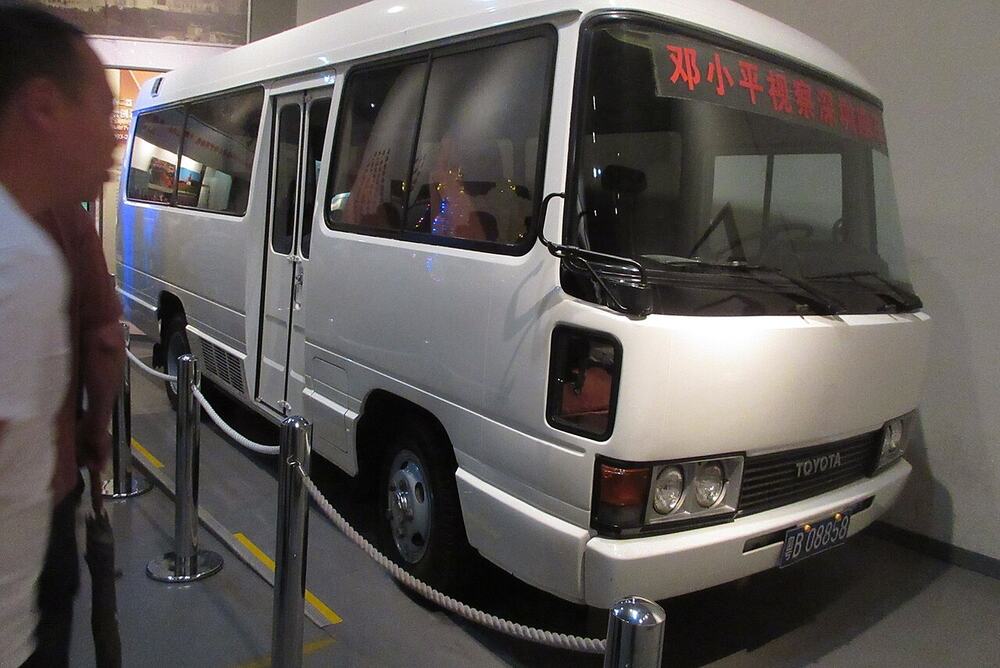
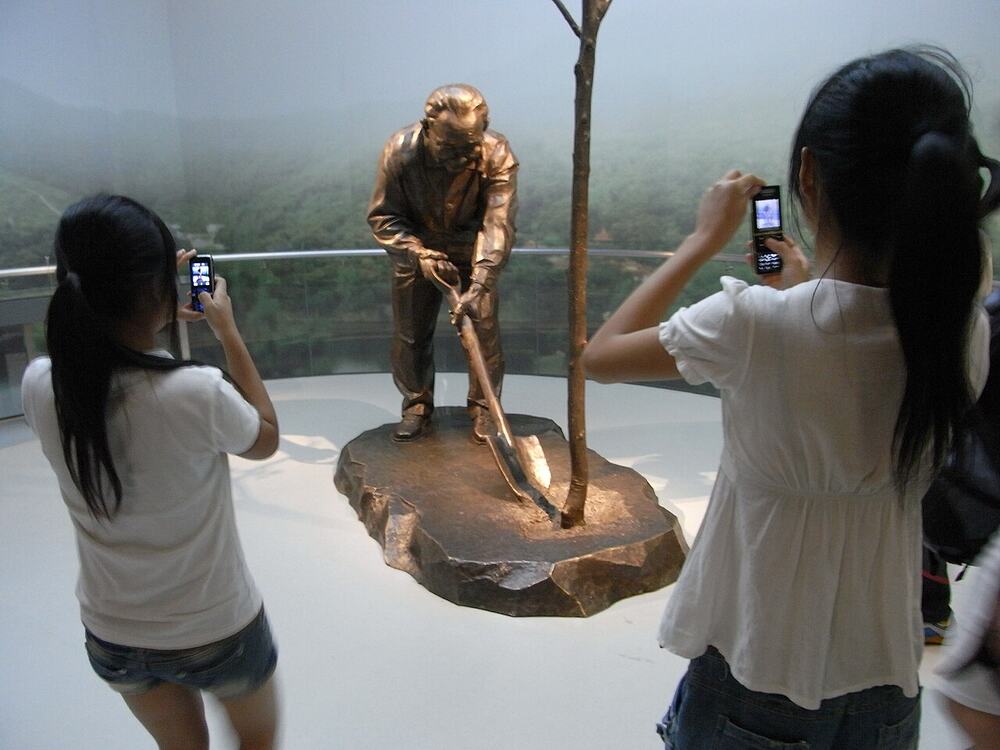
Shenzhen // reform and opening, curated by the state that carried it outThe southern tour // the visit that restarted the programme after 1989
Plates are vendored from Wikimedia Commons under their own licences and re-encoded to web size; the credit for each is listed in the Plate Room.