FILE 10 // EST. 1924 // SEAT: MOSCOW // STATUS: THE ORTHODOXY — POWER, PLAN, PURGE
MARXISM–LENINISM
Socialism in one country: the doctrine of the party-state — the school that
industrialized a continent, defeated the Wehrmacht, built the Gulag, and wrote the official
catechism every other file defines itself against.
A.K.A. STALINISMTHE APPARATUSMETHOD: FIVE-YEAR PLANDISSENT: FILED UNDER ARTICLE 58
SPAWNED FROM
Leninism— codified after the founder's death, in the codifier's favour
The term itself is the origin story: "Marxism–Leninism" was coined under Stalin after
Lenin's death, and its founding text is Stalin's 1924 lecture series Foundations of Leninism —
the living argument frozen into a catechism, with the lecturer as its licensed interpreter. Joseph
Djugashvili — seminarian, bank-robber for the cause, editor, General Secretary — held the post everyone
else thought clerical and understood before anyone else that in a one-party state, the file clerk
is the state.
The doctrinal core was forged in the succession war: against Trotsky's permanent revolution, Stalin
and Bukharin advanced socialism in one country — the USSR could and must build socialism alone,
encircled, now. It won because it answered the apparatus's actual condition: an exhausted country, a
party of new recruits who had joined a state rather than a revolution, and a promise that the sacrifice
already made was sufficient rather than a down payment on Europe's. By 1929 Stalin had defeated the
left opposition with Bukharin's help and Bukharin with the left's program: forced collectivization
and breakneck industrialization — the "revolution from above."
02 Core Doctrine
Socialism in one country
The world revolution is postponed, not cancelled; meanwhile the USSR's survival is the
revolution, and every party on earth owes it defense. Internationalism thus inverts into an
instrument of one state's foreign policy — the hinge on which every later schism turns.
The party-state
The vanguard becomes the government becomes the society: party cells in every institution,
nomenklatura appointments for every post that matters, the "leading role" written into the
constitution. Democratic centralism, now with a census.
Central planning
Five-year plans replace the market: Gosplan sets outputs, prices and priorities for a continent.
It built Magnitogorsk from bare steppe and put the first satellite in orbit; it also queued a
superpower for bread. The archive files both facts without netting them.
Sharpening class struggle
Stalin's signature addition: as socialism advances, resistance intensifies — therefore vigilance,
therefore the organs, therefore the quota'd arrests. The theorem that turned a security service
into a mode of production.
The cult and the line
Truth is what the party says, and the party is what the General Secretary says: history rewritten
edition by edition, comrades airbrushed from photographs they had been shot out of. The
Short Course (1938) as the century's most printed work of fiction filed as history.
"The death of one man is a tragedy. The death of millions is a statistic."
— ATTRIBUTED TO STALIN; THE ARCHIVE NOTES THE ATTRIBUTION IS DISPUTED AND THE STATISTICS ARE NOT
03 Key Figures
JOSEPH STALIN 1878–1953 // the General Secretary
HO CHI MINH 1890–1969 // the doctrine's ablest export franchise
FIDEL CASTRO 1926–2016 // the late convert who outlasted the church
04 In Practice
No file in this archive carries a heavier ledger, and the archive declines to lighten either column.
Credit side: a peasant empire industrialized in a decade; mass literacy; the Red Army breaking
the Wehrmacht at Stalingrad and Kursk at a cost of twenty-seven million Soviet lives; postwar
superpower, Sputnik, Gagarin. Debit side: (the numbers, the archival revisions and the defence are set out in Annex B) collectivization's famines, above all the Ukrainian
Holodomor's millions; the Great Terror of 1936–38 — roughly 700,000 executions, the party's own
founders confessing to fabrications before the bullet; the Gulag's eighteen million passages; whole
nations deported by rail. The doctrine's defenders periodize (revolution besieged, fascism at the
gate); its ex-communicants answer that the theory itself — sharpening struggle, the infallible line —
was the machine's blueprint, not its malfunction.
After 1953 the doctrine survived its author in editions: Khrushchev's de-Stalinization
(Schism №9) kept the party-state while disavowing the terror;
Brezhnev's "developed socialism" kept the party-state while disavowing motion. It was exported —
Eastern Europe by occupation, China, Vietnam, Cuba by revolution — and each export eventually forked
the code: this file is the trunk of more schisms than any other. In December 1991 the flag came down
over the Kremlin; the ideology's remaining implementations are listed under FILES 12, 16 and 20,
each denying the others' license.
05 Schisms & Enemies
vs. Trotskyism (1923–1940). The succession war — Schism №7.
Settled inside the USSR by the executioner; outside, never.
vs. Titoism (1948). The first ruling-party defection — Schism №8.
"Titoite" joined "Trotskyite" in the show-trial lexicon across Eastern Europe.
vs. Maoism (1956–1969). De-Stalinization read from Beijing as apostasy —
Schism №10. The movement's Rome–Avignon split.
vs. Eurocommunism (1975–). The Western parties' exit — Schism №12:
the doctrine's own children citing its tanks as grounds.
vs. every other file in the building. Anarchists (1921, 1937), left communists (1921),
social democrats (permanently): Marxism–Leninism is the archive's load-bearing enemy — the school
the others define themselves against, because it is the school that actually ruled.
06 Timeline
1924Lenin dies; Foundations of Leninism; the term "Marxism–Leninism" enters circulation.
1932–33Famine across the grain belt; the Holodomor in Ukraine.
1936–38The Great Terror and the Moscow Trials.
1939The Molotov–Ribbentrop pact stuns the world's parties.
1941–45The Great Patriotic War; the doctrine's legitimating epic.
1949Soviet bomb; the bloc consolidates; China joins the column.
1953Stalin dies; the file passes to its editors.
1956Secret Speech; Hungary. The trunk begins shedding branches.
1968Prague Spring crushed; "normalization" becomes a term of art.
1985–91Perestroika, glasnost, dissolution. The archive stamps the file: CLOSED IN COUNTRY OF ORIGIN.
07 Legacy
Marxism–Leninism is the only school here that ran a superpower for seven decades, and so it is the
evidence locker for every argument about communism as such: its defenders point to Stalingrad,
literacy and Gagarin; its prosecutors to the Terror, the famines and the wall built to keep the
liberated in. Four states still cite the doctrine; one of them (FILE 20)
runs it on markets, which every other claimant calls proof of apostasy. The deepest legacy is
definitional: for a century, "communism" has meant — for billions — whatever this file did.
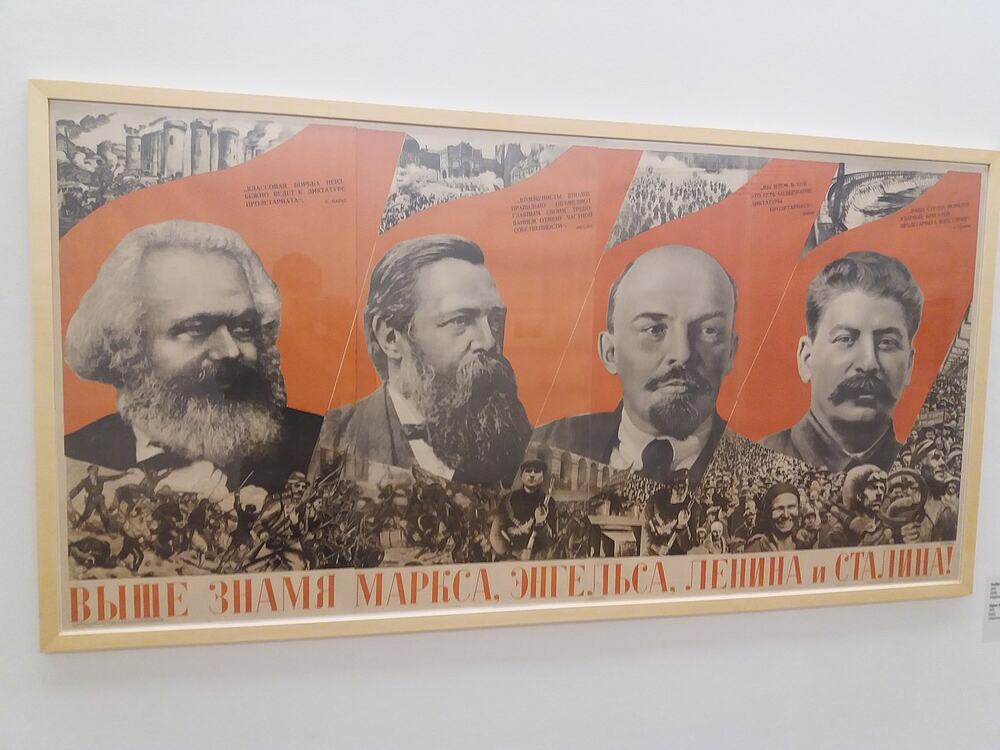
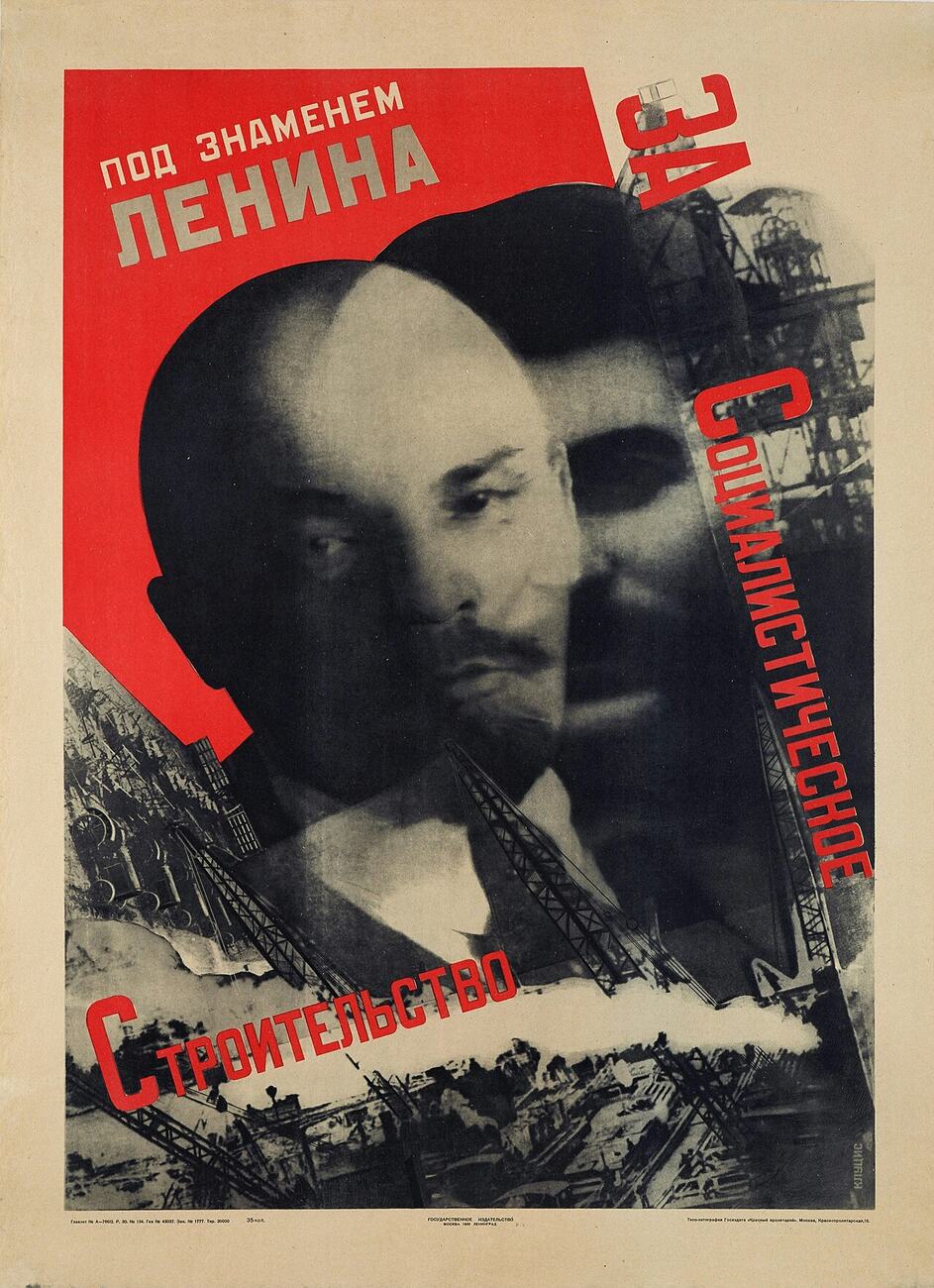
The state doctrine, in the visual language it invented for itself: the four heads in sequence, and the congress that made the sequence official.
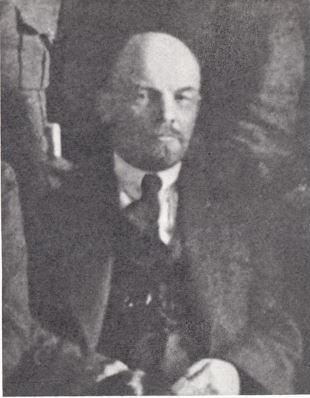
Klucis // Marx, Engels, Lenin, Stalin — apostolic succession, printedKlucis // "Under the banner of Lenin for socialist construction"1919 // the First Comintern Congress — where the Twenty-One Conditions came from
Plates are vendored from Wikimedia Commons under their own licences and re-encoded to web size; the credit for each is listed in the Plate Room.