Hegemony
Rule by consent, manufactured in civil society. Counter-strategy: build counter-hegemony — a rival common sense — before and beneath any assault on the state. Every culture war since borrows the map, most without attribution.
FILE 11 // EST. 1923 // SEATS: TURIN PRISON, FRANKFURT, PARIS // STATUS: THE LONG DETOUR THROUGH CULTURE
The revolution failed in the West — so Marxism went looking for the reason in culture, consciousness and the administered mind. From Gramsci's prison notebooks to the Frankfurt School's culture industry: the file that moved into the superstructure.
The file opens on a failure: between 1918 and 1923, revolution was attempted in Germany, Hungary, Italy — every advanced country where Marx's math said it was due — and lost every time. Two participants wrote the post-mortems that became a school. Georg Lukács, commissar of the doomed Hungarian Soviet Republic, published History and Class Consciousness (1923): capitalism's deepest product is not goods but reification — social relations congealed into things — and the proletariat's revolution must therefore be a revolution in consciousness. Moscow condemned the book; Lukács recanted; the book escaped anyway.
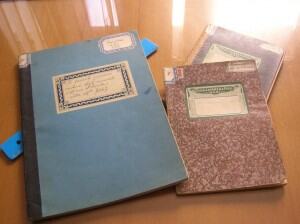
Antonio Gramsci, founder-leader of the Italian Communist Party, was handed his research grant by a fascist court in 1926 — "for twenty years we must stop this brain from functioning," said the prosecutor, achieving the opposite. The Prison Notebooks, 3,000 pages smuggled past the censor in code, asked the school's question in its permanent form: why did the workers consent? Answer: hegemony — the ruling class rules less by police than by making its order feel like common sense, through church, school, press and habit. In the West, therefore, revolution is a war of position — a long siege in civil society — not the East's war of maneuver. A third institution completed the triangle: the Institute for Social Research in Frankfurt (1923), which fused Marx with Freud and, exiled to America by Hitler, turned its instruments on modernity itself.
Rule by consent, manufactured in civil society. Counter-strategy: build counter-hegemony — a rival common sense — before and beneath any assault on the state. Every culture war since borrows the map, most without attribution.
Lukács: under generalized commodity exchange, relations between people take the form of relations between things, and minds are formatted accordingly. The proletariat is uniquely positioned to see through it — being, itself, the commodity that thinks.
Adorno and Horkheimer, Dialectic of Enlightenment (1944), written in Los Angeles within earshot of the studios: mass culture is a factory producing standardized consciousness — "amusement is the prolongation of work." Emancipation's first casualty is the audience's imagination of it.
Marcuse's 1964 diagnosis: advanced industrial society absorbs its opposition — rebellion is sold back as lifestyle, and unfreedom is comfortable, democratic and air-conditioned. The book 1968's students carried; its author, the only Frankfurt elder who carried theirs.
The French wing: Althusser's ideological state apparatuses — school, family, media — reproduce the relations of production inside heads, "interpellating" individuals as subjects. Structure rules; the humanist Marx is declared a juvenile work. The seminar wars this caused are a schism ledger of their own.
"The crisis consists precisely in the fact that the old is dying and the new cannot be born; in this interregnum a great variety of morbid symptoms appear." — GRAMSCI, PRISON NOTEBOOKS


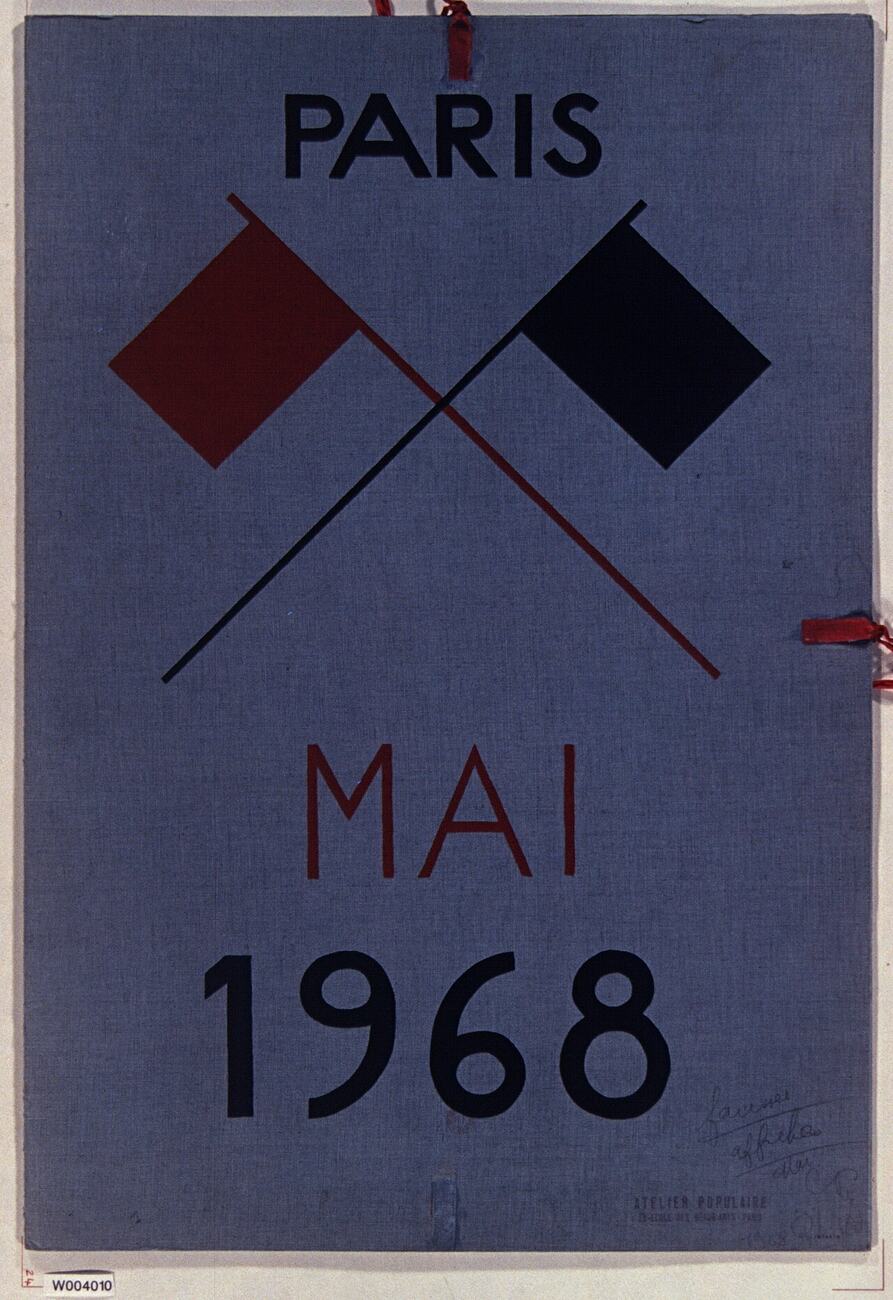
This school's practice is the seminar, the journal and the long game — by design and by indictment. Its one mass moment was 1968: Paris students quoting Marcuse and the Situationists (Debord's Society of the Spectacle is this file's angriest appendix), Frankfurt students occupying the Institute that taught them — and Adorno, in the archive's most instructive irony, calling the police. "I proposed a theory," he protested, "not Molotov cocktails." He died the next year; Marcuse took the students' side; the split between critique and action was never repaired, because it was the school's founding condition.
The longer practice worked exactly as Gramsci drew it, in the one arena the school actually occupied: the university. Cultural studies, critical theory, media studies, postcolonial theory — entire disciplines are this file's descendants. Its enemies on the right accuse it of having won the culture; its critics on the left note that hegemony over the syllabus has coincided with four decades of losing everything else, and that a war of position with no army is called a faculty meeting.
Western Marxism kept Marxism alive as thought through the decades its states were making it unthinkable — and paid the school's own stated price: a critique of everything, a strategy for nothing. Its concepts (hegemony, spectacle, culture industry, interpellation) are now standard equipment across the political spectrum, including for its enemies. Whether that constitutes the war of position succeeding or the culture industry digesting its last critic is the file's final exam question. It remains open-book.
The turn to culture, philosophy and the long war of position — written, for the most part, in defeat, in prison, or in exile.
Plates are vendored from Wikimedia Commons under their own licences and re-encoded to web size; the credit for each is listed in the Plate Room.