FILE 13 // EST. 1948 // SEAT: BELGRADE // STATUS: THE FIRST SUCCESSFUL "NO"
TITOISM
Self-management socialism and non-alignment: the ruling party that defied
Stalin, survived him, handed the factories to workers' councils — on paper and partly in
practice — and refused both blocs for forty years.
vs. Djilas — 1954: the in-house critic goes too far
01 Origin Vector
Josip Broz — Croatian-Slovene machinist, Habsburg conscript, Red Army veteran, Comintern
operative under the workname "Tito" — was Moscow's own appointment to run the Yugoslav party. The war
changed the arithmetic: his Partisans fought the Wehrmacht to a standstill and liberated Yugoslavia
substantially themselves — the only occupied European country freed primarily by its own communists.
A party that owes Moscow nothing behaves accordingly; by 1948 Belgrade was pursuing its own foreign
policy, its own Balkan federation plans, its own pace.
Stalin demanded submission and expected the usual result. The Cominform expelled Yugoslavia
in June 1948; the blockade followed; the assassins followed the blockade — Tito's note back to Moscow
("stop sending people to kill me… if you don't, I will send one to Moscow, and I won't have to send
a second") is the archive's shortest surviving deterrence doctrine. Excommunicated, Belgrade needed a
theology of its own — and built one, arguing that Soviet "state socialism" had degenerated into
bureaucratic despotism, and that the true Marxist alternative was to give the means of production
not to the state but to the workers themselves. See Schism №8.
02 Core Doctrine
Workers' self-management
From 1950: factories run by elected workers' councils, managing production, hiring and the
surplus. Kardelj and Djilas drafted it partly from Marx's Commune texts — the state was to begin
"withering" immediately. In practice the party appointed the managers the councils confirmed;
the archive files the gap as load-bearing.
Market socialism
Social ownership plus market coordination: enterprises competed, prices signalled, and by the
1960s Yugoslavs held passports, worked abroad and shopped across borders — capitalism's shop
window inside socialism's property forms. Inflation and unemployment came bundled.
Non-alignment
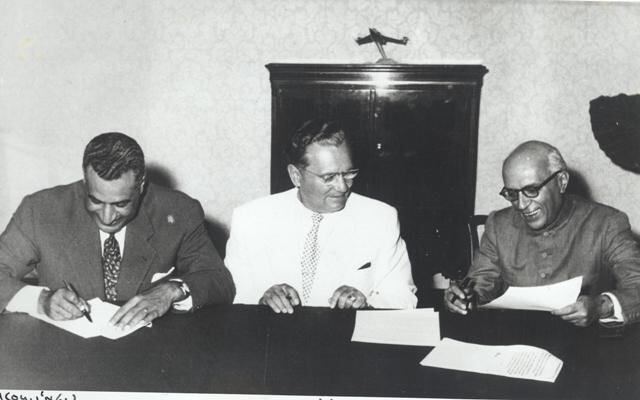
Neither Washington's nor Moscow's: with Nehru and Nasser, Tito co-founded the Non-Aligned
Movement (Belgrade summit, 1961) — the Cold War's third chair, seating most of humanity.
Titoism's most durable export by a wide margin.
National roads to socialism
The heresy underneath the rest: each country's party answers to its own conditions, not to any
international center. Every later defection — Hungarian, Czechoslovak, Eurocommunist — walked
through the door Belgrade held open by surviving.
Brotherhood and unity
The federal formula binding six republics and two alphabets under one party and one Marshal.
It held exactly as long as both did — the doctrine's unresolved dependency, priced fully
in the 1990s.
03 Key Figures
JOSIP BROZ TITO 1892–1980 // the Marshal who said no
04 In Practice
Titoism in operation was the Eastern bloc's standing embarrassment: open borders while the Wall
went up, Fiat licenses and Adriatic tourism while Comecon queued, a million Yugoslav
gastarbeiter remitting Deutschmarks home. Growth through the 1950s–60s ran among Europe's
fastest. The debit column was equally real: Goli Otok, the Adriatic prison island where suspected
Stalinists ("Cominformists") were broken by the thousands after 1948 — the anti-Stalinist state
applying Stalin's methods to Stalin's sympathizers; a single-party apparatus that jailed its own
best-known critic, Milovan Djilas, for writing (The New Class, 1957) that self-management's
party had itself become the owning class; and an economy increasingly run on foreign debt once the
oil shocks hit.
The system's true keystone was actuarial. Tito died in May 1980 in Ljubljana; the funeral drew more
heads of state than any in history to that date — four kings, thirty-one presidents, Brezhnev and
Thatcher in one procession. The rotating presidency he left could not hold what the Marshal's person
had; within a decade the federation's republics were at war, and "Balkanization" — the word Yugoslavia
existed to refute — became its epitaph.
05 Schisms & Enemies
vs. Stalin (1948–1955). The founding schism — Schism №8.
"Titoite" became a capital charge in every people's democracy: Rajk hanged in Budapest, Slánský in
Prague, thousands purged in Tito's name without Tito's involvement. Khrushchev flew to Belgrade in
1955 to apologize; Tito accepted, from the airport tarmac, without reciprocating the pilgrimage.
vs. Djilas (1954–). The in-house critique the system could not metabolize: if the party is
a new class, self-management is its alibi. Djilas got nine years; the book got forty translations.
vs. Hoxha, rhetorically, forever. For Tirana (FILE 17), Titoism
was the original revisionism — the file every anti-revisionist purge cited first.
06 Timeline
1941–45The Partisan war: self-liberation, at the cost of a tenth of the population.
1948June: expelled from the Cominform. The blockade and Goli Otok follow.
1955Khrushchev's Belgrade apology; normalization without submission.
1957Djilas' The New Class published abroad; its author already jailed.
1961First Non-Aligned summit convenes in Belgrade.
1965Market reforms deepen; borders open wide.
1974Final constitution: rotating presidency, Tito president for life.
1980Tito dies; the world's leaders attend; the clock starts.
1991The federation dissolves in war; the file closes in fire it was built to prevent.
07 Legacy
Titoism proved the two things Moscow most needed disproved: that a communist state could defy the
center and live, and that socialism could be run — partially, imperfectly — with markets, open borders
and workers' councils. Every reformer from Prague 1968 to Beijing 1978 read the Yugoslav file first.
Its cautionary clause is equally studied: a system held together by one man's prestige has a term
limit measured in heartbeats, and federations do not survive on nostalgia. The Non-Aligned Movement,
one hundred twenty members strong, remains its living monument.
08 Plates
The one communist state that fought its way to power without the Red Army, and then refused to take orders from it.
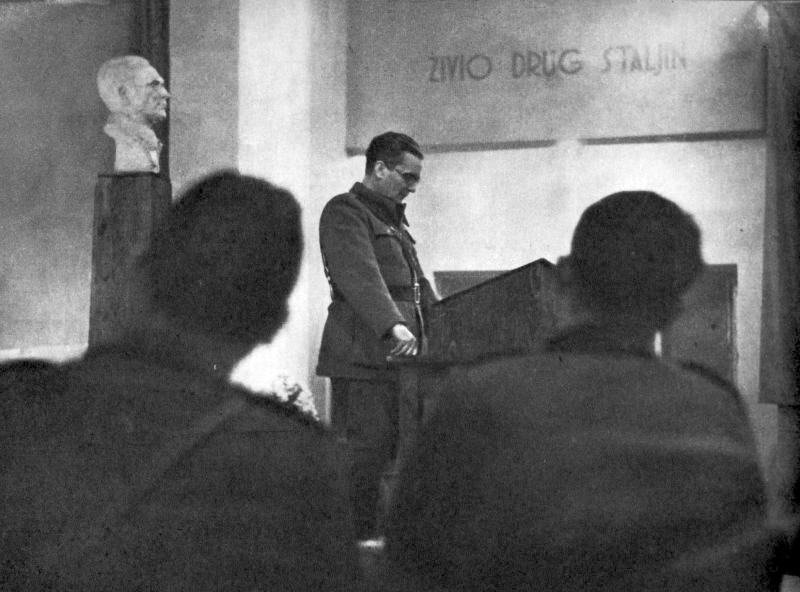
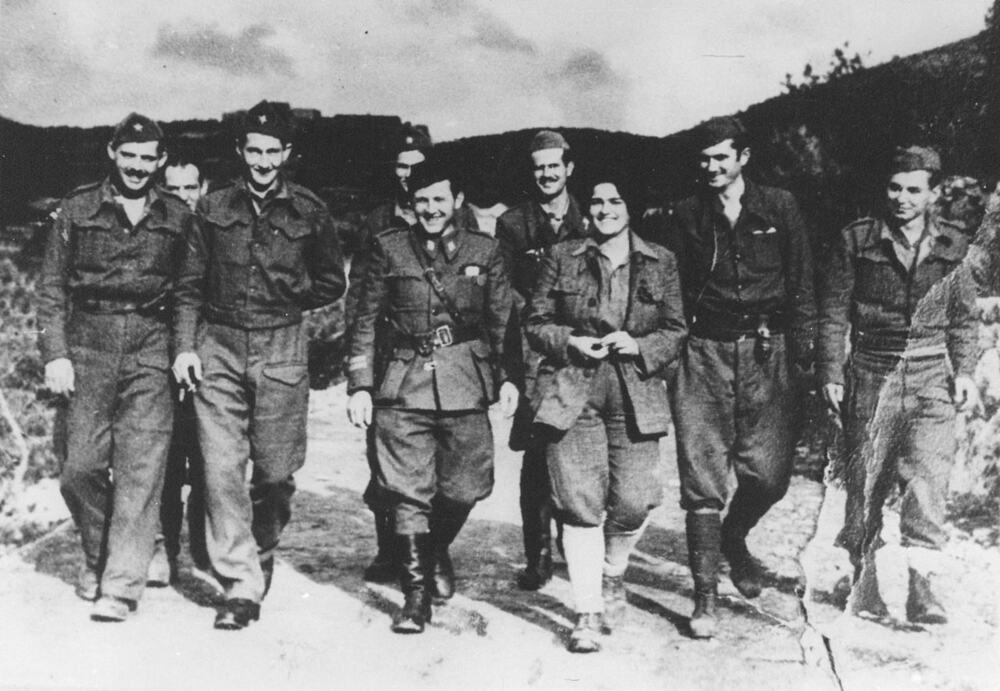
Jajce 1943 // AVNOJ — a state declared in the middle of an occupation1943 // the Partisan command — the army that made the split possibleNon-Aligned // Nehru, Nasser, Tito — the third position, institutionalised
Plates are vendored from Wikimedia Commons under their own licences and re-encoded to web size; the credit for each is listed in the Plate Room.