FILE 14 // EST. 1959 // SEAT: THE SIERRA MAESTRA // STATUS: MARTYRED INTO A LOGO
GUEVARISM
The foco: don't wait for revolutionary conditions — a small armed nucleus in
the mountains creates them. Revolutionary will over revolutionary patience, tested on three
continents, vindicated once.
Latin America's guerrilla generation — from the Tupamaros to the FSLN
Urban-guerrilla derivatives — Marighella's pivot to the cities
SCHISMS
vs. the orthodox parties — who counselled patience and coalition
vs. Moscow's line — peaceful coexistence, rejected with contempt
01 Origin Vector
Ernesto Guevara — Argentine, asthmatic, medical doctor — was radicalized on a motorcycle:
the 1952 journey up the continent's spine showed him the mines and plantations, and Guatemala 1954
showed him the CIA removing an elected government that touched United Fruit's land. The lesson he
took to his grave: reform invites the coup; only armed power protects the revolution. In Mexico City
he met Fidel Castro's exiles and boarded the yacht Granma as expedition doctor. Of eighty-two
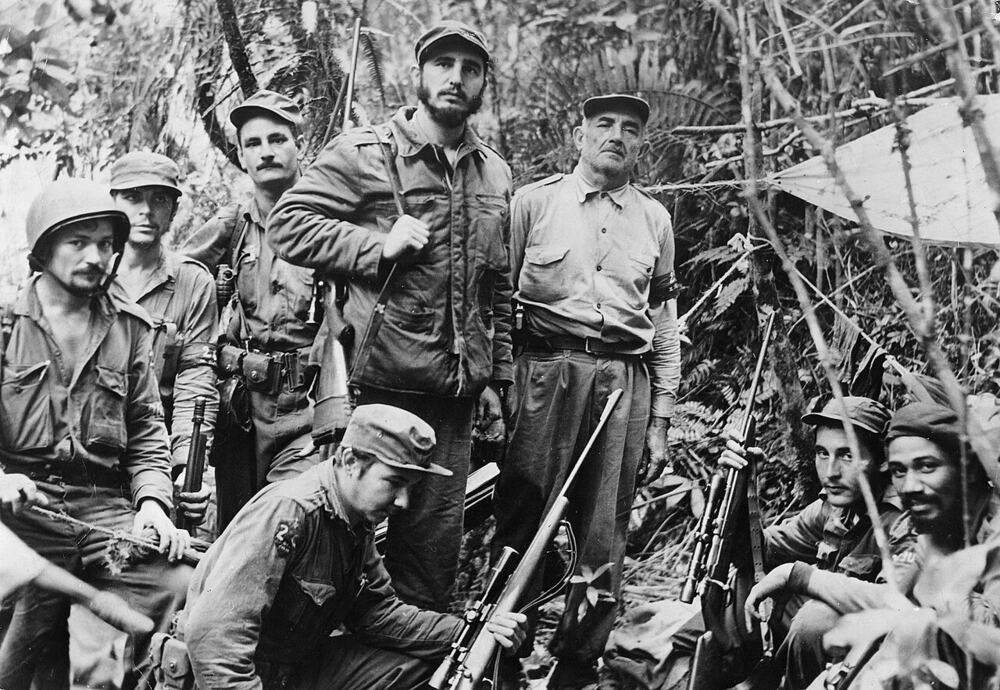
who landed in Cuba in December 1956, about a dozen effectives regrouped in the Sierra Maestra.
Twenty-five months later they were in Havana.
That arithmetic — twelve men to a state in two years — became the doctrine. Che's
Guerrilla Warfare (1960) and Régis Debray's systematization Revolution in the Revolution?
(1967) distilled it: the insurrectionary foco (focus) does not wait for the party, the
proletariat or the objective conditions. The guerrilla band is "the party in embryo"; action is
propaganda; the countryside is the arena. It was Leninism with the waiting deleted — and, critics
noted immediately, with Cuba's exceptional circumstances promoted to universal law.
02 Core Doctrine
The foco
A small, mobile armed nucleus rooted in rough terrain. It need not reflect existing discontent;
by fighting and surviving it demonstrates the regime's mortality and detonates the latent
revolution. The insurrection precedes the party — Leninism inverted.
Conditions are made, not awaited
Against every patient school in this archive: "it is not necessary to wait until all conditions
for making revolution exist; the insurrection can create them." The sentence over which Guevarism
and orthodoxy permanently parted.
Armed propaganda
Every ambush is a communiqué. The guerrilla's real target is consciousness: each survival proves
the army is not invincible, each reprisal recruits the village it punishes.
The New Man
Socialism and Man in Cuba (1965): socialism must produce a person moved by moral rather
than material incentives — voluntary labour, internationalist duty. Che worked the cane fields
on Sundays as advertisement. The doctrine's gentlest text, guarding its hardest core.
Tricontinentalism
"Create two, three, many Vietnams": imperialism is a world system and must be bled at its
peripheries simultaneously. Havana's 1966 Tricontinental conference made the slogan
institutional.
"Wherever death may surprise us, let it be welcome, provided that this,
our battle cry, may have reached some receptive ear."— CHE GUEVARA, MESSAGE TO THE TRICONTINENTAL (1967)
03 Key Figures
CHE GUEVARA 1928–1967 // the doctrine and the photograph
FIDEL CASTRO 1926–2016 // the foco's commander — and its exception
04 In Practice
The doctrine's record is Cuba, then the bill. In victorious Havana, Che ran the National Bank
(signing the currency "Che") and the Industry Ministry, presided over revolutionary tribunals at
La Cabaña — the file does not omit them — and grew impatient with both superpowers: his 1965 Algiers
speech accused the socialist bloc itself of trading like imperialists. Then he vanished from public
view and re-ran the experiment twice. In the Congo (1965): failure, recorded in his own
unsparing diary. In Bolivia (1966–67): the peasants did not rise, the Communist Party withheld
support, the CIA-trained Rangers closed the ring. Captured at Quebrada del Yuro on 8 October 1967,
he was shot the next day in the Vallegrande schoolhouse. The army displayed the body; the photograph
— eyes open, faintly smiling — did more recruiting than the foco ever had.
Imitator focos failed across the continent through the 1960s; Marighella moved the method to the
cities and died there; the one arguable later success, Nicaragua's Sandinistas (1979), won by mass
insurrection — the strategy the foco was designed to skip. Debray, the doctrine's own systematizer,
recanted from a Bolivian prison. The verdict most cited in the archive: Cuba proved what a foco can
do against a rotten, isolated dictatorship; everywhere else proved how rare that conjunction is.
05 Schisms & Enemies
vs. the orthodox communist parties. Latin America's Moscow-line parties preferred elections
and alliances; Che's shorthand for them was unprintable. Bolivia's party, decisively, sat out his
last campaign. The quarrel — vanguard of arms versus vanguard of patience — killed focos from
Guatemala to Peru.
vs. peaceful coexistence. The Algiers speech burned the school's bridges to both Moscow
and, awkwardly, its own patron in Havana: solidarity, Che held, is not a trade policy.
vs. Allende's ballot road, posthumously. Chile 1973 became the school's grim vindication
in absentia: the coup Che had predicted for any unarmed socialism arrived on schedule. Eurocommunism
(FILE 19) drew the opposite lesson from the same corpse — the
archive shelves the two readings facing each other.
06 Timeline
1952The motorcycle journey; the continent as clinic.
1954Guatemala: the CIA coup watched from street level.
1956The Granma lands; a dozen survivors reach the Sierra Maestra.
19591 January: Havana falls; the exception becomes a doctrine.
1960Guerrilla Warfare published — the manual.
1965Algiers speech; the Congo expedition; Che renounces rank and citizenship.
1966Tricontinental conference; the Bolivian foco inserted.
19678–9 October: captured and executed; the diary and the photograph begin their second campaign.
1979Nicaragua: the generation he armed wins — by other means.
07 Legacy
Guevarism contributed the archive's most portable article of faith — that revolution is an act of
will — and its most reproduced image; Korda's photograph has sold more units than any argument in
this building. The doctrine proper is studied mainly as cautionary strategy, its casualty list
running from Bolivia's canyons to a generation of Latin American militants. What survives intact is
the temperament: the refusal to wait, the internationalism without portfolio, and the standing
rebuke — priced at one life, paid in full — to every school that filed revolution under
"eventually."
08 Plates
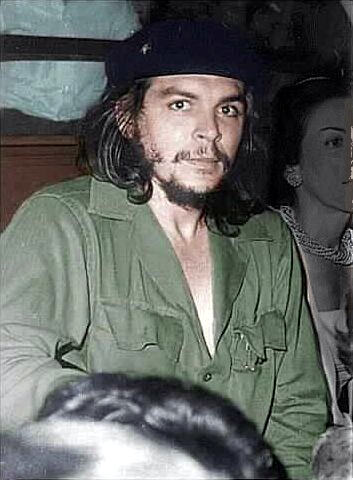
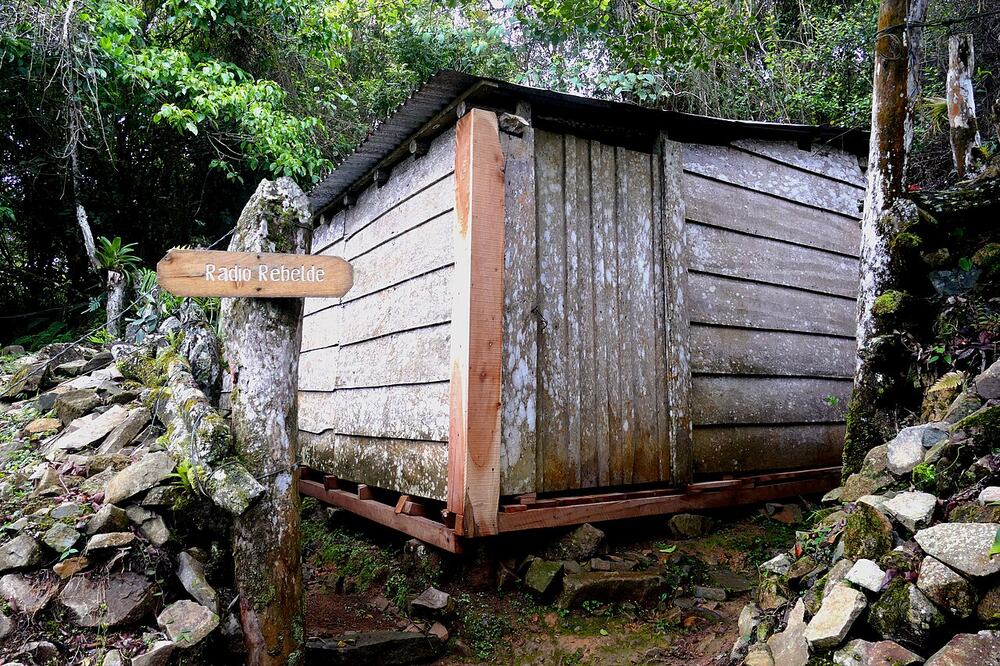
Foco theory, photographed where it worked and where it did not: the Sierra Maestra, then Bolivia.
2 June 1959 // Guevara, five months after HavanaSierra Maestra // the column that proved the theory onceRadio Rebelde // the transmitter — the foco's other weapon
Plates are vendored from Wikimedia Commons under their own licences and re-encoded to web size; the credit for each is listed in the Plate Room.